
Takao by night: Trail One and Inariyama ✨🐿
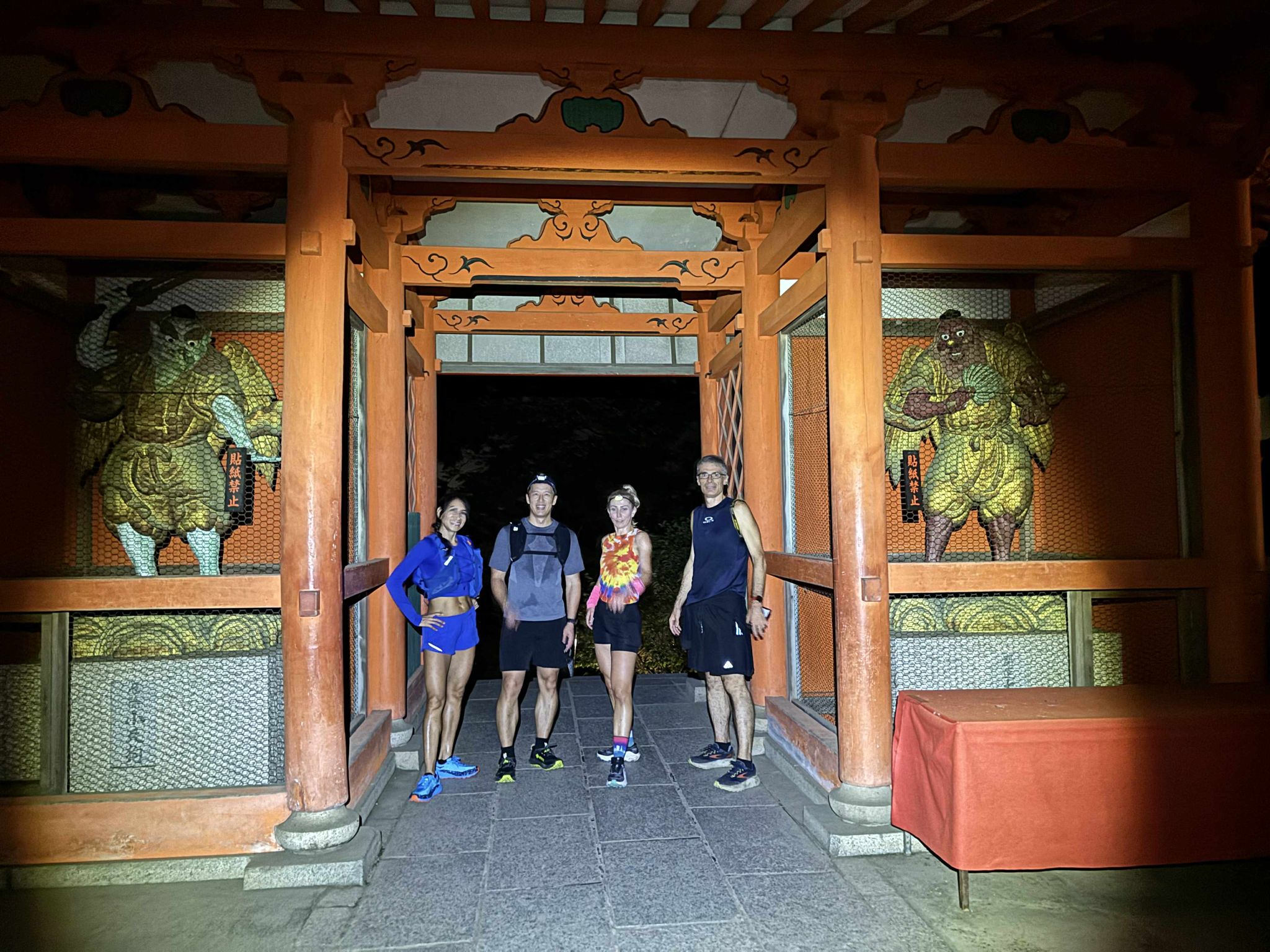
Trailrunning in Takao without the crowds? The solution is simple and effective: night running!
There's an ironic twist to Mount Takao: when most people talk about trail-running there, they are actually referring to the surrounding areas, not the peak itself.
Spots like Kobotoke-Shiroyama, Jinba, and Minami-Takao offer plenty of scenic, runnable paths waiting to be explored—yet the summit sees remarkably few runners. Some popular resources, such as takao-trail-manners.jp, even omit it entirely from their maps.
The culprit is overcrowding. With Takaosanguchi Station positioned right at its base and a cable car/chairlift combo carrying visitors halfway up the slope, Mount Takao ranks among the world's most visited summits. Arrive at the wrong time, and you'll find yourself navigating more like Harajuku during rush hour than conquering a mountain path.
Fortunately, there's a beautiful workaround: night trail-running. Most day-hikers descend around 16:00 once the huts and shops shut down, leaving only scattered individuals chasing the sunset. Head up around 19:00 instead, and you'll likely have the entire mountain to yourself—with perhaps a handful of nocturnal insect enthusiasts as your only companions. No worries for your return: trains will be waiting for you until 23:00 and beyond.
Running counter to the usual flow rewards you with more than just space. As the city's twinkling lights spread beneath you and the temple settles into silence nearby, you'll discover a rare tranquility. And since Trail 1 remains electrically lit all the way to the summit, solitude becomes optional—you'll feel as isolated or connected as you choose.
So bring your favorite head-lamp and enjoy this beautiful Tokyo adventure!
Details
| 📏 Distance | 7,6 km |
| 🗻 Climb | 480 m |
| 📌 Start | Keio Takaosanguchi station |
| 🏁 End | Keio Takaosanguchi station |
| 💪 Level | Begginners. The trail is wide and not technical or steep |
| 👟 Shoes | Grippy sneakers are sufficient |
Access and amenities
| 🚄 Access | From Shinjuku Station, you can take the Keio Line for approximately 50 minutes to disembark at Takaosanguchi station. The trains run very frequently, arriving even every 10 minutes. Depending on the time of the day, your best solution could be an express train going to Takaosanguchi or taking an express to Hachijoji and then switching to a local train to Takaosanguchi in Kitano station. |
| 🗄 Lockers | There are multiple lockers placed both to the left of the exit of the station (where the onsen is) or to the right (past the toilets) |
| ♨ Hot springs | Keio Takaosan Onsen Gokurakuyu sits conveniently just behind Takaosanguchi Station. For groups—or those planning repeat visits—it's worth considering the 10-ticket bundle, which brings the cost down significantly from 1,300 to 600 JPY per visit. |
| 🚻 Toilets | Restrooms can be found both inside and outside Takaosanguchi Station. If the indoor facilities and the ones near the entrance are busy, head for the restroom located on the opposite side, in the low building past the large red torii gate—it tends to draw fewer crowds. Facilities are also available at the ropeway's lower station and again near the summit should you need them along the way. |
| 🍽 Food | There are multiple restaurants around the road leading to the ropeway station (mostly selling soba) and a couple huts on Trail 1 going to the summit (selling snacks). However, the only places open after sunset will be the restaurant inside the onsen or the two convenience stores along the road to Takao station. |
The route
From the Takaosanguchi Station exit, turn right and follow the road toward the ropeway station. Just past it, you'll spot a small bridge with a staircase on your left—that's the Inariyama Trail, which you'll be descending from later. For now, keep heading forward along the wide, paved path that winds its way up.
After a series of switchbacks and steep sections, you'll arrive at the upper stations for both the chairlift and the ropeway. Beyond this point, the trail levels out and opens up to sweeping views over the city below.
Passing through the wooden gate of Takaosan Yakuo-in Josshinmon, you'll face two options: the stairs to the left (otokozaka) or the ascending path to the right (onnazaka), both leading to the shrine complex. While most visitors cut straight through the shrine itself to reach the summit, that stretch isn't really runnable.
To make the most of the climb, I usually take time to admire the tengu statues near the gate and enjoy the view from the terrace, then ascend the stairs to Izuna Gongen Shrine. From there, I immediately take the stairs to the left going down to the wooden Kuromon Gate—which, ironically, you're not permitted to pass through—. To continue, take the path behind you to the left, starting between the two large trees.
After running alongside an old pavilion, the trail resumes its climb along the mountainside toward the summit. This marks your first section without lighting—a good moment to test your headlamp. A few minutes in, you'll reach a fork with a tree at its center. Follow the paved road as it turns sharply right and continues upward toward the summit. Once you rejoin the main trail near the washrooms, turn left for the final push to the top.
At the summit, you'll find drinking water, vending machines, and a bit further along, restrooms and a couple of tables where you can sit and eat if needed.
After snapping the obligatory photo at the summit marker, make your way across the square to the Omiharashidai Viewpoint. While you won't catch any Fuji views after dark, this is where the Inariyama Trail begins, guiding you back down to the ropeway's lower station.
The trail is wide and easy to follow, just be careful about your footing while you descend back to the start.